
An authorized distributor and a wholesaler are not necessarily different companies. One describes a relationship with a manufacturer or brand; the other describes a resale activity. A business can be both, and it can hold authorization for one product line while sourcing another independently. The useful comparison therefore starts with the goods on a quotation, not a badge on the supplier’s homepage.
For branded inventory, separate four questions: who the seller is, whether the brand recognizes its role, what the specific products are, and what happens if they fail. A positive answer to one question does not settle the other three. This article provides a practical sequence for making that distinction before placing an order.

Define the authorization you actually need
Ask what the seller means by authorized. It might refer to distribution, retail resale, installation, repair or another role. Those permissions are not automatically interchangeable. A service provider listing does not, by itself, demonstrate a right to supply wholesale inventory, and a brand relationship for one territory does not answer questions about a different destination.
Record the brand, product family, legal entity and intended selling channel. If your purchase depends on a particular authorization, tell the supplier that it is a selection requirement rather than an optional marketing detail. You do not necessarily need its confidential commercial agreement, but you do need evidence sufficient to confirm the relevant scope. Use the channel-role glossary when the seller’s terminology mixes several activities.
Verify through a manufacturer-controlled route
Start with the manufacturer’s own website. If it publishes a distributor directory, compare the listed entity and location with the quotation and invoice information. Check whether the listing concerns the product family involved. Save the date and result in the supplier record so a later colleague knows what was checked, rather than remembering only that someone saw a logo.
If the directory is absent or ambiguous, contact the manufacturer through details obtained independently from its official site. Ask a narrow question: whether the named business is recognized for the stated product line and destination. Do not rely exclusively on a telephone number or forwarded message supplied by the seller. If confirmation is unavailable, record the claim as unverified; willingness to answer questions is useful, but it is not equivalent to independent confirmation.
Keep brand ownership separate from dealer status
A seller may say that it owns a brand, is an exclusive representative or is an authorized reseller. Those are different claims. The USPTO trademark database is a starting point for examining U.S. trademark records, not a directory of distribution contracts. A trademark record alone cannot establish that another company has current dealer permission or territorial exclusivity.
Do not turn a name match into a broader conclusion. Compare the actual entity and ask for clarification where a trading name, parent company or subsidiary appears. Likewise, failure to find a familiar name in one search is not a complete legal analysis of ownership. Resolve material intellectual-property or contractual questions with qualified advice when necessary. The purchasing task is to identify the evidence gap, not to declare rights from an incomplete search.
Examine the shipment independently of the relationship
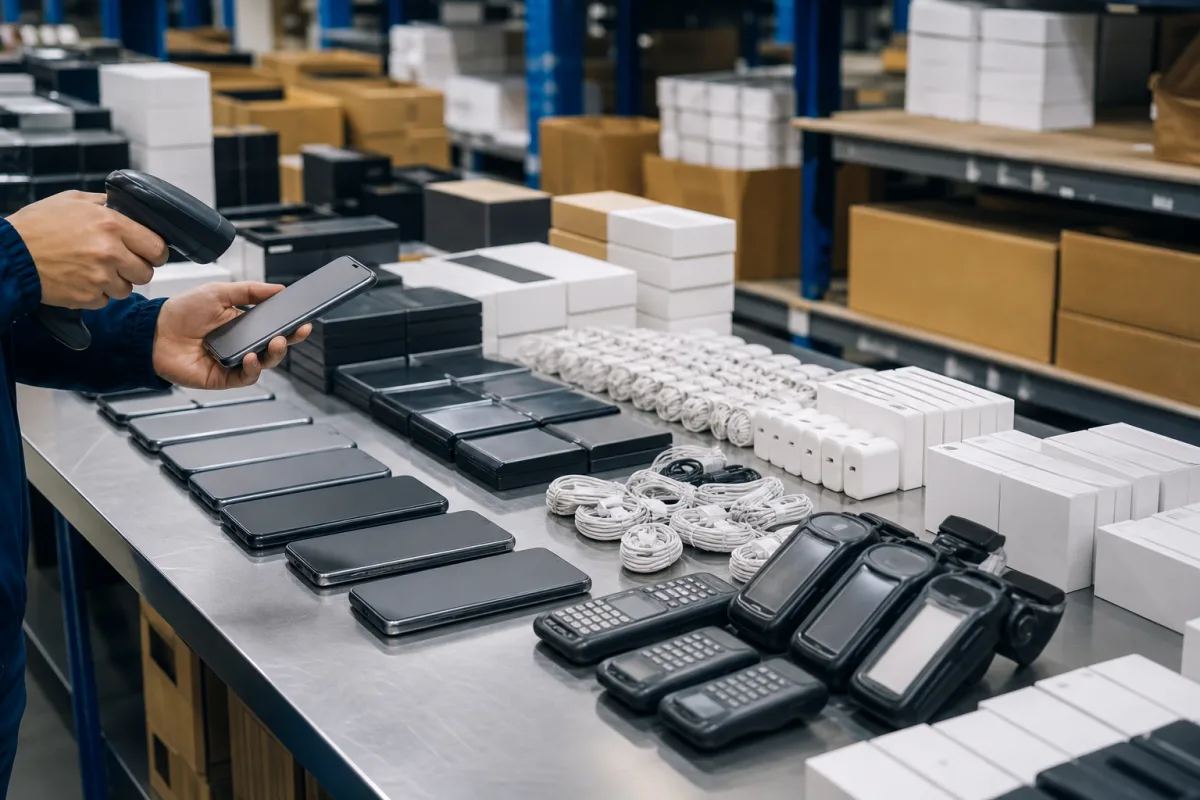
Even a confirmed distributor relationship does not tell you whether the quoted stock is present, reserved or in the condition required. Ask for the manufacturer part number, regional suffix where relevant, package contents, condition and quantity. For serialized goods, agree how shipment identifiers will connect to invoices and returns. Use product documentation to check suitability rather than assuming all variants carrying the same brand name are equivalent.
A supplier may offer both standard channel inventory and a separate clearance position. Require line-by-line answers where sourcing differs. Our price-list and stock-list guide explains why catalogue presence is not an allocation, while supplier verification covers the counterparty checks that still apply to an apparently well-connected seller.
Confirm the warranty route in usable terms
Ask who receives a failure report: the seller, the manufacturer or a separate service company. Then ask which products qualify, when coverage begins, what proof is needed and who arranges transport. Distinguish a delivery discrepancy from a defect reported months later. A short inspection window and a longer product warranty may involve different contacts, evidence and remedies.
For a concrete illustration, Apple’s published U.S. warranty says service for specified devices may be restricted to their original country of sale and that proof-of-purchase details may be required. That is a product-specific example of why origin and records matter, not a rule for every brand or a finding about any offered device. Check the applicable product and market terms before advertising coverage to your own customers.
Assess independent supply without assuming the conclusion
Open-market goods can arise from surplus, discontinued lines or redistribution between businesses. Such an origin does not automatically establish counterfeiting, missing warranty or poor service. Equally, a low price and a plausible explanation do not establish authenticity. Ask for a coherent origin account, appropriate invoice evidence, exact product details and clear failure-handling terms.
Treat unanswered questions as uncertainty, not proof of either wrongdoing or safety. If a seller cannot provide the evidence your customer commitments require, that is enough reason to decline without making accusations. The electronics distribution report shows how model, condition and service questions interact in a category where small differences can change the resale proposition.
Compare the complete offer using explicit scenarios
Imagine a hypothetical order of 50 identical units. Offer A totals $5,200 delivered, with documented supplier handling of qualifying defects under stated terms. Offer B totals $4,700 delivered but leaves you responsible for an additional inspection process costing $200. The visible difference after that inspection allowance is $300, not $500. Before calling B the better buy, establish whether both offers support the same product and service promise.
Do not invent a failure rate simply to justify the preferred price. Instead, calculate scenarios grounded in your costs. If an uncovered problem would cost $100 to resolve, three such problems would consume the remaining $300 difference in this simplified example. That is a sensitivity calculation, not a prediction that three failures will occur. It also excludes staff time and other costs you would need to consider in a real decision. Use comparing quotes on equal terms to keep the confirmed charges separate from uncertain outcomes.
Put material claims into the order record
Before payment, reconcile the seller’s quotation with the product specification and any answers that influenced selection. Note the promised condition, allowed substitutions, packaging, warranty provider and discrepancy procedure. Ask the supplier to correct inconsistencies rather than assuming the most favorable version will govern. Contract interpretation depends on the documents and applicable law; this checklist is not a substitute for legal review of a significant agreement.
A practical record should let another employee understand the purchase without reconstructing a message thread. Include the quote revision, contact details and dated manufacturer confirmation where available. If the company changes the payment recipient or collection address unexpectedly, verify that change through a trusted channel. Authorization checks do not eliminate the need to notice transaction-level changes.

Use the first delivery to test the process
At receipt, check identifiers, quantity, packaging and visible condition against the order. Follow the agreed inspection and reporting schedule, retaining the evidence required for any discrepancy. A clean first shipment is useful experience, but it does not prove every later shipment will be equivalent. Recheck relevant claims when the product line, source, seller entity or destination changes.
Choose the supply route that supports your actual obligations and operating capacity. Authorization can be valuable evidence of a commercial relationship, but it is not a universal guarantee. Independent supply can be workable when its product and service position is adequately documented. The final decision should explain what was verified, what remains uncertain and why the proposed order fits the promises your business intends to make.
Frequently asked questions
How can I confirm a supplier is authorized?
Check the manufacturer's official directory or obtain confirmation through an independently located manufacturer contact. Match the legal entity, product line, territory and relevant sales channel; an unexplained logo is not enough.
Is open-market stock counterfeit?
Not by definition. Independent supply can include genuine surplus or discontinued products. Authenticity, origin, condition and warranty eligibility still need separate evidence for the particular goods.
Does authorization guarantee warranty coverage?
No blanket guarantee follows from the label. Confirm the warranty provider, eligible product and market, required purchase records and actual service process before promising coverage to customers.
Sources
- Apple One Year Limited Warranty, U.S. — Apple Accessed September 5, 2026.
- Search our trademark database — United States Patent and Trademark Office Accessed September 5, 2026.